[in]complete #1: oh no, not again
A smart person would have settled this by now, but I am emotionally damaged and find failure often crippling to rationalise.

![[in]complete #1: oh no, not again](/content/images/size/w1200/2026/03/-in-complete-1-1.png)
This happens at roughly the same time every year, has for seven years now. It would be a foolish person who did not finally acknowledge that when it does, I am upset. What am I talking about? I am referring to what happens to this particular non-binary brain when I fail to place in the National Poetry Competition. A smart person would have settled this by now, but I am emotionally damaged and find failure often crippling to rationalise.
This year, it IS going to be different. This week I plucked up the courage to post some feedback on my work that many would consider perfectly acceptable as a response. I found it demeaning and hurtful, and being told that I should stop expecting to be treated differently and simply take the criticism by someone anonymously after posting it on Instagram was, it must be said, the last straw.
Transparency and care matters more, every single time.

There were more than 21,000 entries by poets in 113 countries for this year's National. The outcome comms remain head and shoulders better than pretty much anybody else's, and TPS deserve respect for making that happen with such a huge number of items to sift through. The BlueSky thread above was the starting point for this post, and make me think critically about the process for the first time.
I don't expect feedback on contest work, and never will, because it is a literal impossibility. What I realise I hadn't properly accepted until that other piece of 'feedback' dropped in my Inbox was the gulf of interpretation that 'feedback' entails for other poets. If that's true for one part of the process, will it not simply be true for the others? Failure is a far more complex and significant beast.
Failure, however, can helpfully be rationalised in simpler terms.
I write a version of this post for myself on a regular basis, because it is easy to forget in the chaos of reality that this outcome is inevitable. I have to fail, over and over again, in order to learn the lessons that life did not provide for me at earlier points in my existence. It is easy to blame other people for their shortcomings, far harder to accept the wider reality of how we must learn to become own teachers. The onus is on me to accept, forgive, and improve.
As a result of this, I will open myself up mentally and share my unbridled anger at when a poem won a previous National that I considered was an unacceptable showcase for abuse. It was a completely subjective reading (and ultimately for me unhelpful and damaging) of a poem that three other people considered the best entry of the year. It opened my eyes to the process of how we absorb poetry and how it is almost impossible to do so without a measure of misinterpretation.
This is when I also began to accept that asking for somebody else's comprehension is not as helpful as I first assumed it would be.
I am painfully aware that my perception of time is not like other people's. I've been writing this post, for example, for what seems like days. My poetry work has never been based in the same versions of space (and time) as many other people's is and I will, I accept, only ever truly relate to certain people when moments of my existence effectively overlap theirs. Writing this down makes me emotional beyond measure.
It's how I know that it's the right reading of this work. It's how I ultimately improve, mature and grow as a writer going forward. It is, crucially, also the realisation that saves my sanity long-term. Feedback is not comprehension, it's how to make ideas more accessible. It's clarity and self belief and ultimately the truth that resides in the emotional core of your being. It is not close reading.
Failing has been a vital means to help unlock a lost emotional self.
You may wonder why a machinima is here, at this point. This is the story of how one tool became outmoded, fell into disrepair and was forgotten, except now in World of Warcraft, the Summoning Stone is undergoing a renaissance. All ideas that once were have a habit of coming back again, over time. Reading this year's winning National poem, it's the antithesis of anything I could ever write.
However, it mentions Gaza, and as a result holds a resonance to something I am passionate about. It is a very strong reminder that I need to be kinder on myself, that if other people's poetry is not my style, my approach or indeed my interest, I must respect what it is made of and how that process must be kept sacred. This is how I learn and grow as a poet. This post is a successful breakthrough.
If I attempt to emulate others, however, that is all it will ever be.
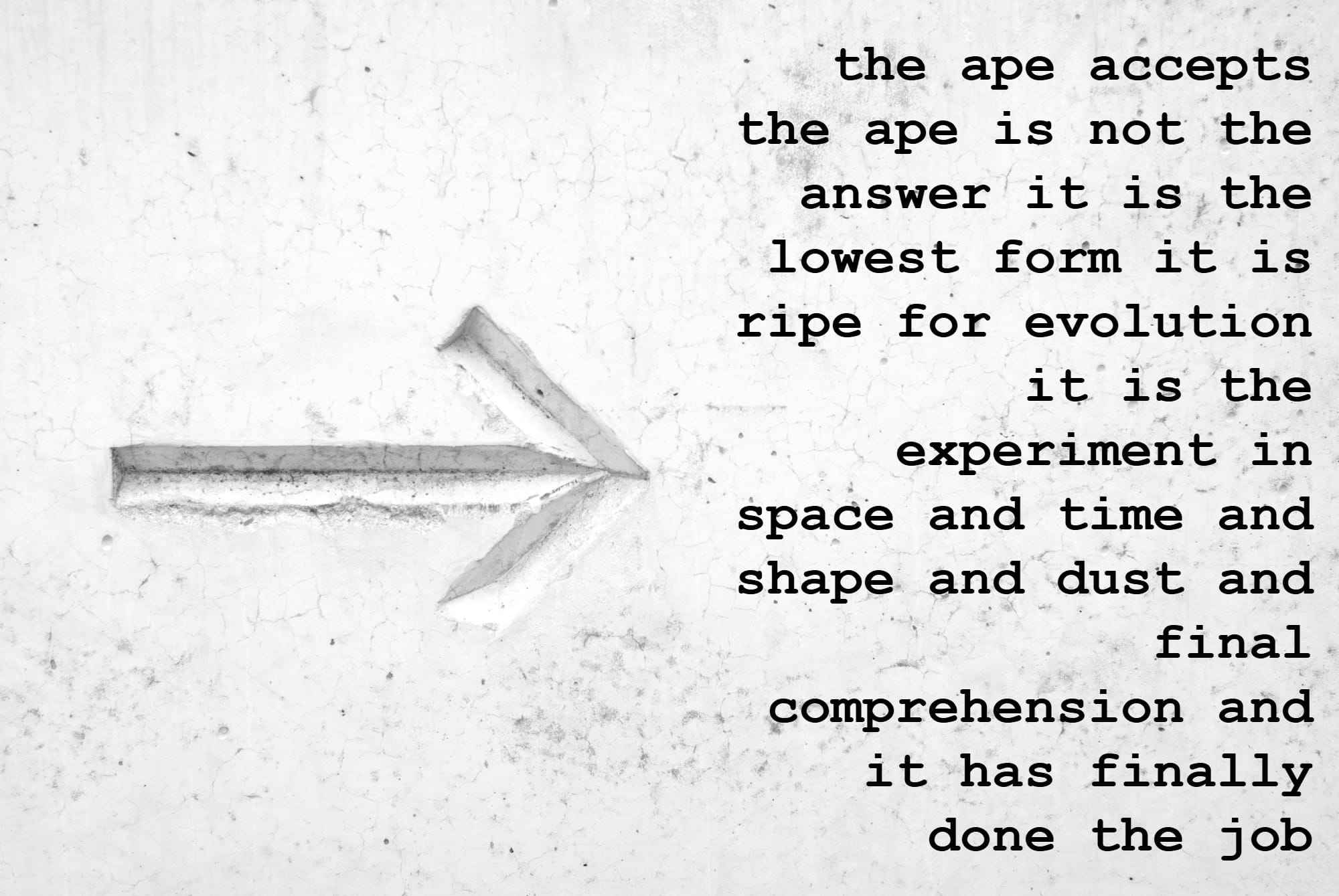
I will never be something I am not. I can pretend I am, and that has happened more times than should ever have been the case previously. It will not happen in the future, for my time here is finite and never have I been more aware of that than I am right now. If you're reading this and that poem you knew was the best thing you had in the National didn't make the cut, you are not alone.
This time around I will do things differently. I don't need prompts on what to write next and I am not asking for people to be kind. I need hard answers, and a validation that yes, there are some definite physical things I could improve upon. I don't need anybody else to tell me what they see in my work. I need more at this point to understand how it makes them feel.
Poetic failure is helping me comprehend an unacceptable emotional deficiency.
![[in]complete #2: I see You](/content/images/size/w600/2026/03/-in-complete-2-1.png)